Context for confidence
When a candidate is flagged, Time Lens gives you the tools and context to make smart, fast, and defensible decisions — grounded in evidence, not assumptions.
The insight
Risk changes.
Most screening tools don't.
A past conviction appears, and it's assumed to reflect present risk. But decades of criminology research tells a different story — and most screening tools don't reflect that reality.
Decades of research
Built on criminology and labor economics evidence
Dynamic, not static
Risk changes dramatically over time
Transparent signals
Every factor is traceable to its research source
From flag to decision
Candidate flagged
Policy Nexus identifies records that need human review based on your screening policies.
Time Lens analyzes
Research-backed signals factor in time elapsed, severity, and desistance data to contextualize the record.
You decide
Clear reasoning, transparent factors, and full audit trail backing every call.
What factors inform an individualized assessment of a criminal record?
An individualized assessment considers the offense, time elapsed, job relevance, and the candidate’s circumstances. Time Lens adds research-based context on elapsed time, age, and conviction history to help employers assess the record’s significance and support a reasoned decision.
Explore the data behind
every decision
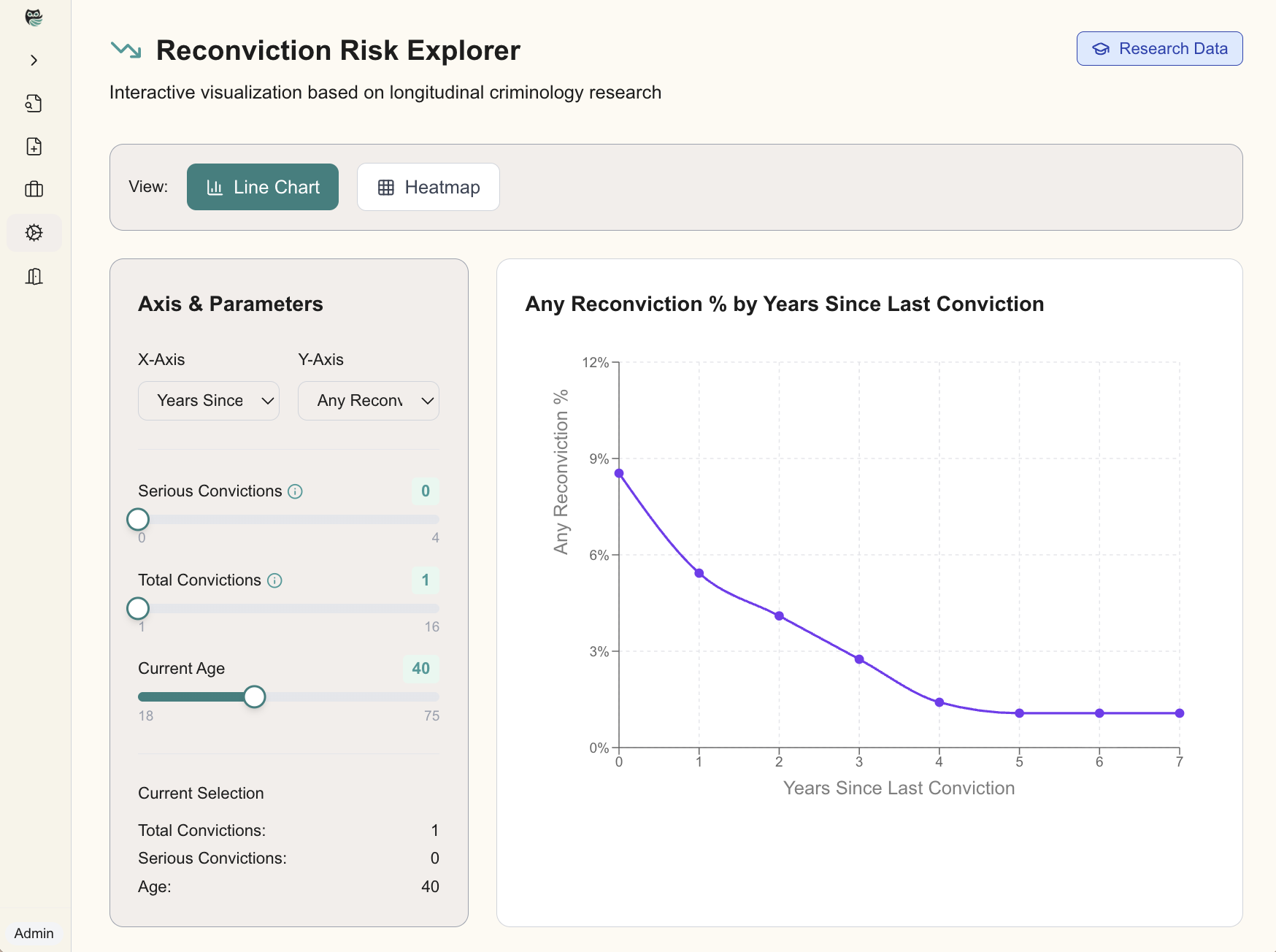
The Reconviction Risk Explorer lets you visualize longitudinal criminology research interactively. Adjust parameters like age, conviction count, and years since last conviction to see how reconviction probability changes over time.
Your team
Stronger signals. Better outcomes.
Time Lens doesn't replace human judgment — it sharpens it.
Individualized assessments
Grounded in data, not assumptions. Every factor is visible and every signal traces to its research source.
Understand the why
Behind elevated or reduced risk — not just what appeared, but what it actually means for present-day risk.
Resolve cases faster
With greater consistency across your team. Less guesswork means fewer escalations.
Research-backed
Developed in partnership with leading criminologists and labor economists — so the signals reflect how risk actually behaves.
FAQs
How is Kizuna different from background checks?+
We don't replace them — we make their reports actionable with clear hiring recommendations.
Is this legally defensible?+
Yes. Our methodology is grounded in peer-reviewed research and designed to meet local, state and federal requirements.
How do I know why a record was flagged?+
Kizuna shows which of your criteria the record met and the research-based context that applies to it, so a reviewer can see the basis for the flag and examine whether the concern is supported. The reviewer's assessment and decision are recorded in the review workflow.
How does Kizuna support individualized assessment?+
Flagged records carry the nature of the offense, the time elapsed, and the role in structured form, alongside the candidate's response and research-based context on how those factors relate to documented outcomes. Reviewers record their reasoning per case, so the assessment is documented, not just performed.
Make the call with confidence
Kizuna's adjudication tools work together — backed by data, guided by expertise, rooted in reality.
Explore the platform